Engineering Design
3D-Printed Wind Turbine
A compact turbine optimized for power and stiffness
UC Berkeley Engineering 26 · 2024 · 125 words · 1 min read
What
Project scope
A small-scale turbine developed under strict volume and manufacturing constraints, combining NACA airfoil research, a lightweight two-piece tower, FEA, and physical power and deflection testing.
How
Technical approach
SolidWorks · FEA · SLA 3D printing · Airfoil design · Power testing
Why
Outcome
The project connected aerodynamic choices, structural analysis, and measured power output in a tightly constrained physical build.
Key evidence
Process 01
Tower design
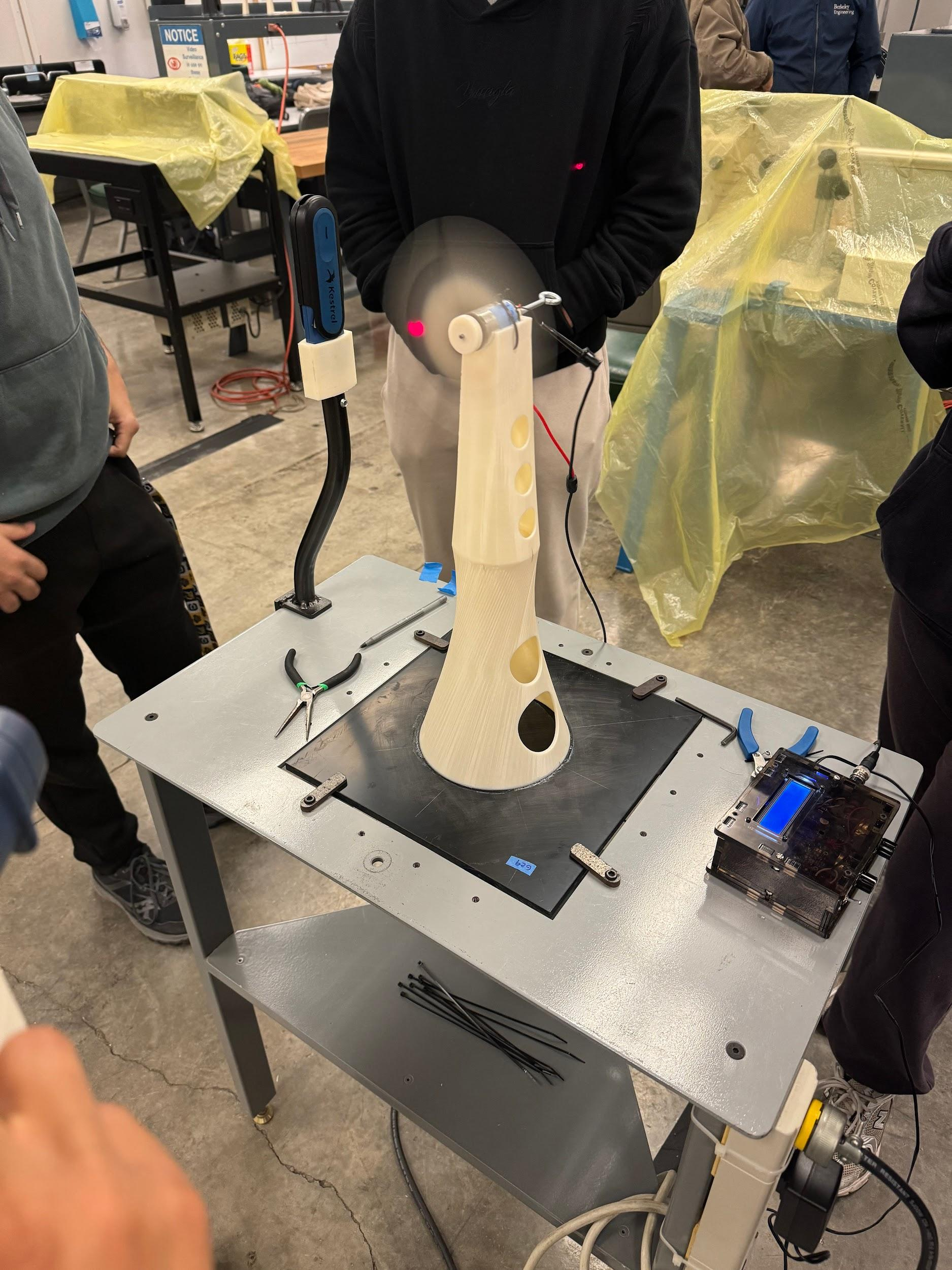
The tower had to fit a 17 cubic-inch volume limit, place the rotor hub at the required height, and print as two pieces within the available machine envelope. SolidWorks lofts, a high-area-moment cross section, and FEA-guided material removal produced a light, printable structure that remained stiff under load.
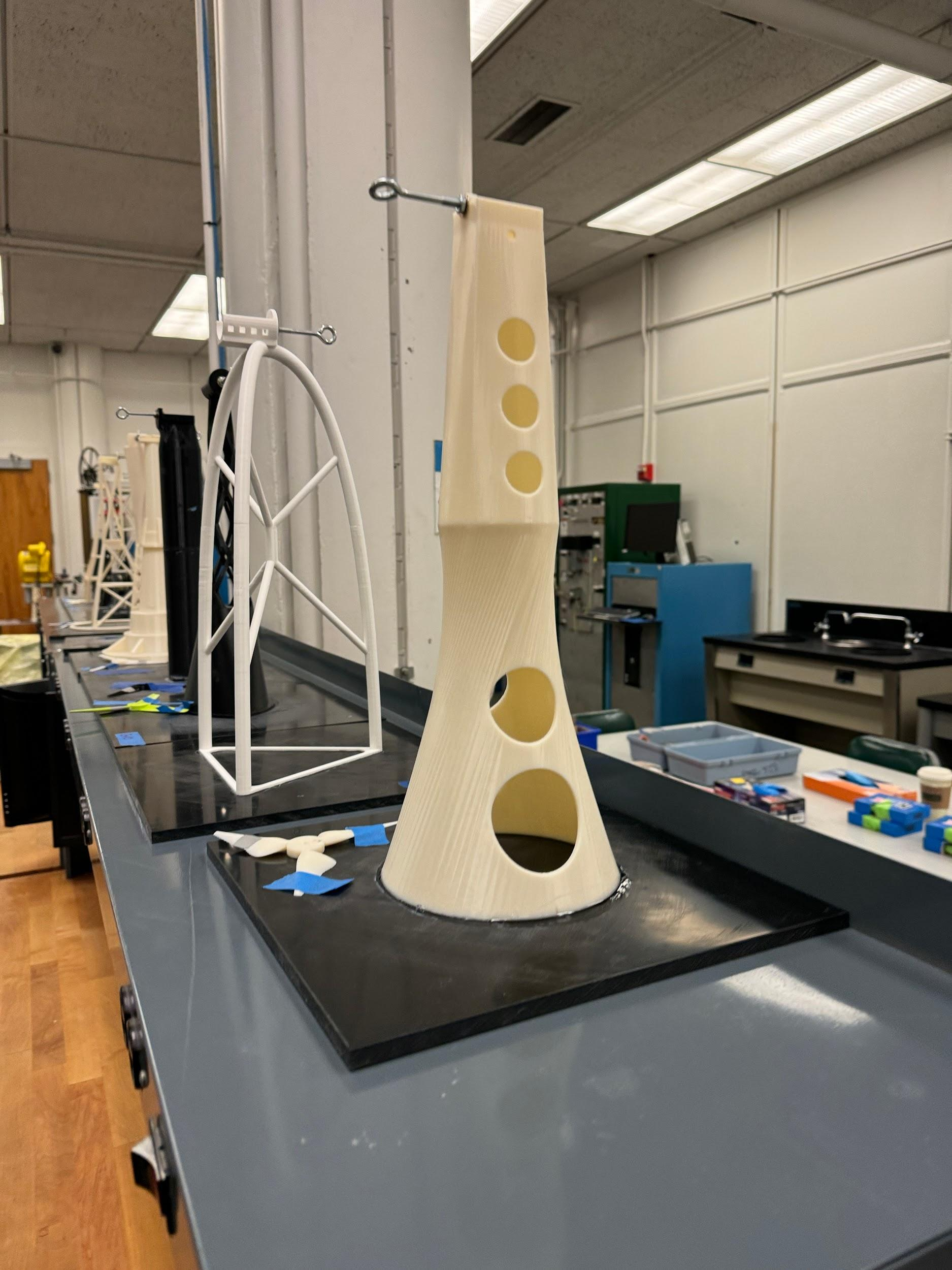
The assembled two-piece ABS tower before rotor installation.
Process 02
Blade design and testing
NACA 4424 and NACA 63-415 profiles informed the blade geometry. The finished turbine was tested at approximately 25 mph while voltage, current, power, rotational speed, and tower deflection were measured and compared with simulation results.
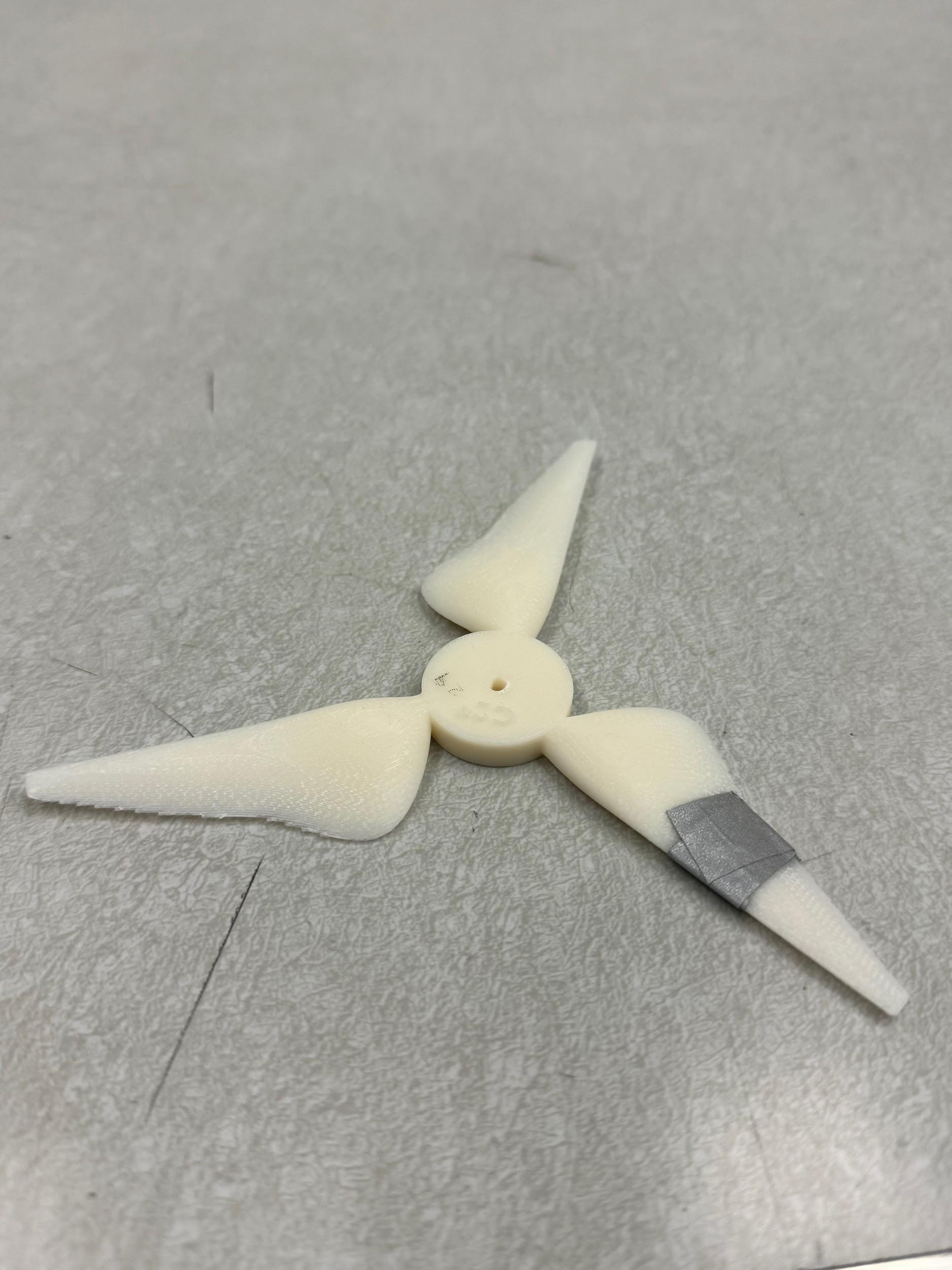
A printed blade set used during build and validation.
Project gallery